A French listing tells you the rooms, not the ground under them, the noise through the window, or whether the commune will let you rent to tourists. Secrets.RealEstate assembles those from public French and European data for any address, and they are the questions that decide whether a good flat is a good purchase.
The risk that is in the ground, not the building
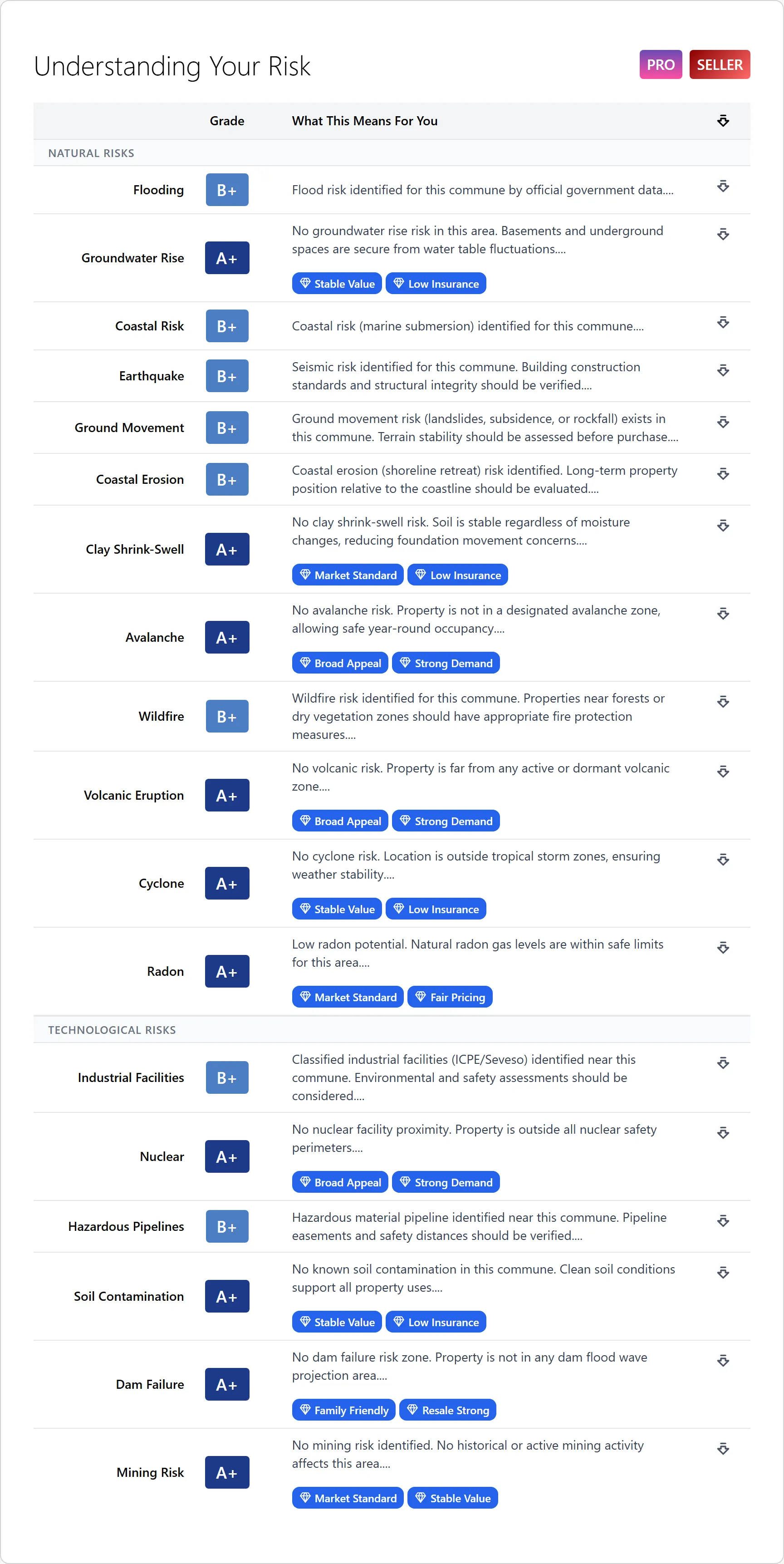
Clay shrinkage is France's most expensive residential hazard that nobody mentions at a viewing. Dry summers shrink clay soils, wet winters swell them, and the foundations of a detached house move with them. The result is structural cracking that arrives years after the sale.
The exposure is not marginal. In the July 2025 BDNB release, 53.9 % of French building records sit in a clay-risk zone classified moderate or high — 17,381,000 of 32,216,606 records, with the unclassified ones left in the denominator, so the true share among classified buildings is higher still.
What to do with that: the zone is not a verdict. A house built on the right foundations in a high-exposure zone can be fine, and a badly underpinned extension in a moderate zone can be a disaster. What the zone tells you is which question to ask the seller, and whether an engineer's opinion is worth its fee before you sign.
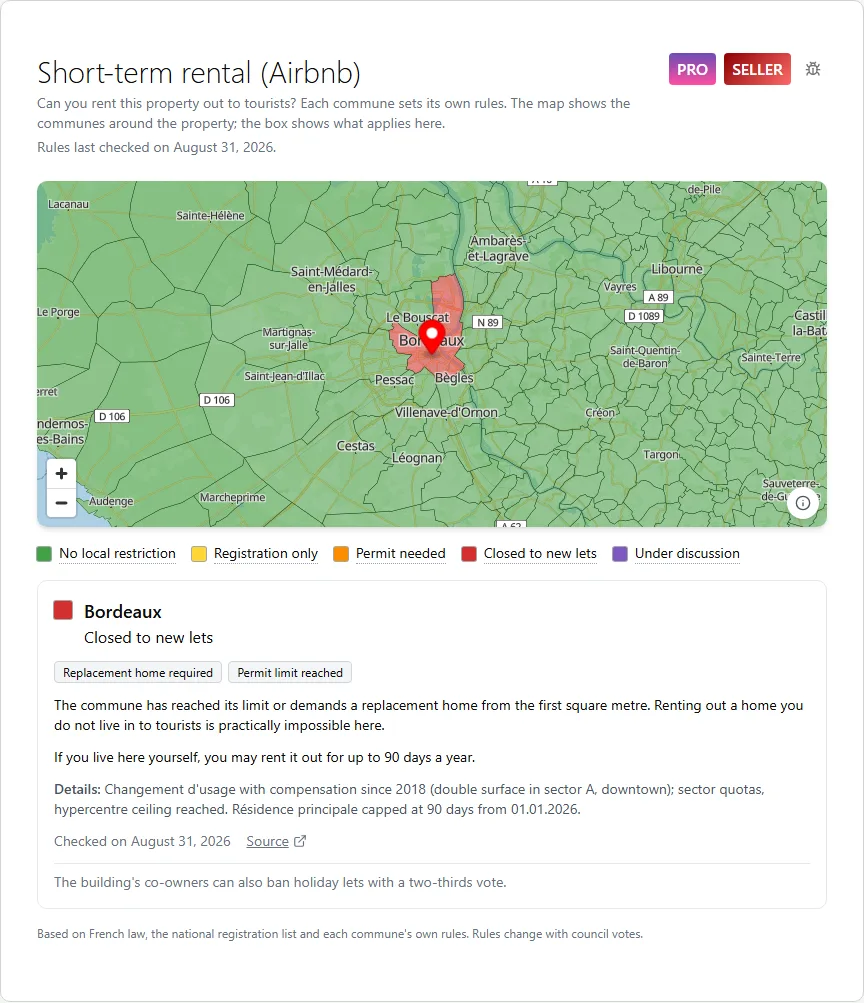
Which French communes cap short-term rentals?
Since the loi Le Meur of November 2024, a French commune may require authorisation to let a furnished home to tourists — the rule is no longer automatic nationally, it is a decision of each local assembly, which is why the answer changes at the commune boundary. In the Secrets.RealEstate short-term-rental dataset, 424 French communes have a documented regime, 110 of them checked directly against the mairie or the intercommunal règlement rather than inferred from a national list. Of those, 37 are effectively closed to a new tourist letting of a home you do not live in, either because the quota is full or because compensation is demanded from the first square metre. Nine apply a 90-day annual ceiling to letting your own main residence. If the plan is to buy and rent to visitors, this is not a detail to check after the compromis — in the strictest communes it is the difference between a business and a second home.
What the rule actually looks like on the ground
Three regimes, and the same flat can fall under any of them depending on which side of a commune line it sits:
- No local rule. You register, you let, and the national framework applies.
- Authorisation required. The mairie decides, often with a quota and sometimes with a compensation requirement — turn commercial floorspace into housing to earn the right to turn housing into a tourist let.
- Effectively closed. The quota is exhausted or the compensation demand is unmeetable for a private owner.
Add the 90-day rule, which is a separate axis: it limits how long you may let the home you actually live in, and it applies in the nine communes in the dataset that have adopted it. Tourist-heavy islands and coastal communes are where the tightest regimes cluster, and they are also where the yield calculation that justified the purchase usually lives. Check the commune, not the department: see how the map reads a commune's rule.
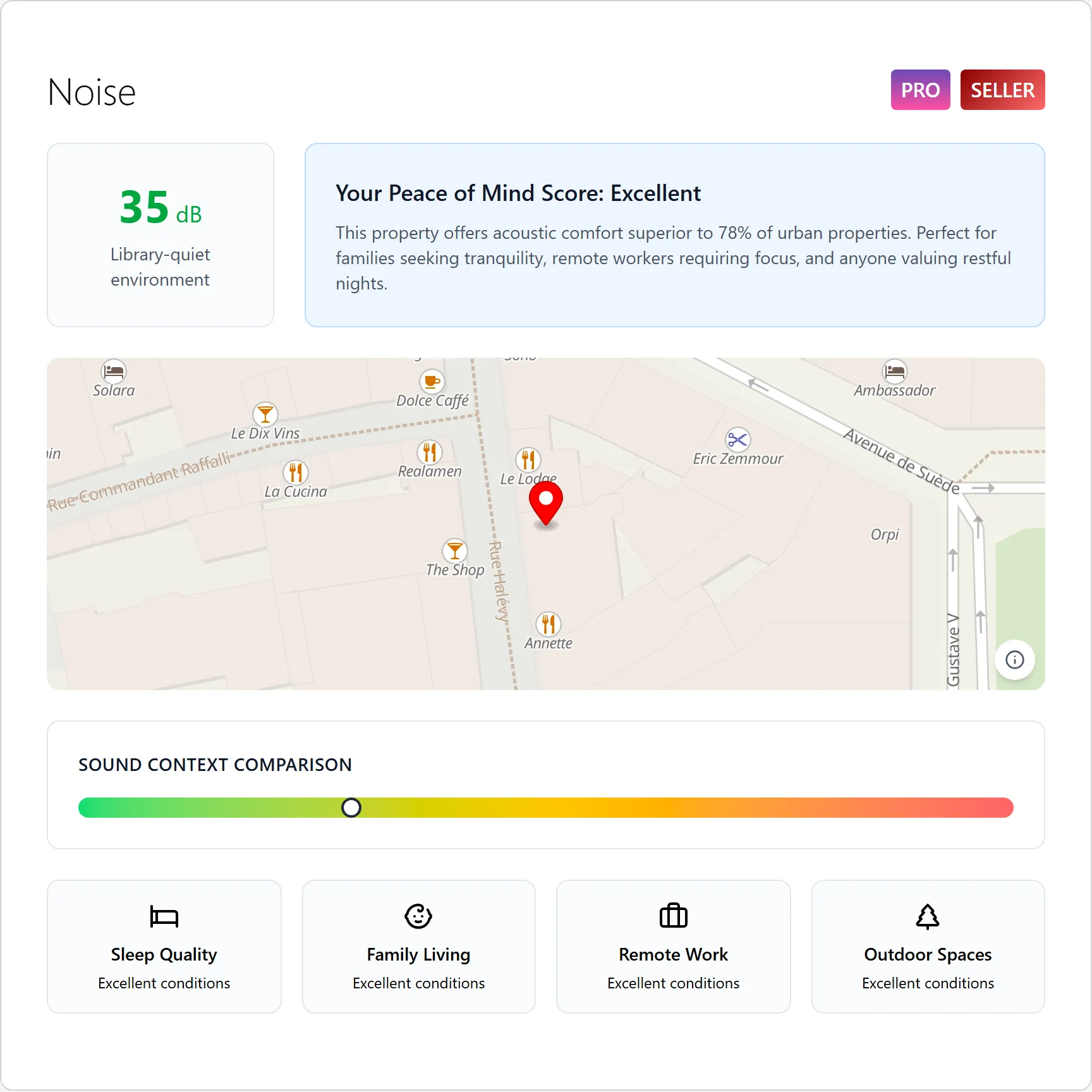
Noise, sun and shadow: the three things a photo hides
A listing photo is taken on a bright day, from the one angle that works, with the window shut. Three questions survive that treatment and none of them are in the text:
- What will you hear? Road, rail and air noise are modelled and mapped for France, and the difference between the quiet façade and the loud one is a room-by-room decision, not a building-level one.
- How much sun does it actually get? Orientation plus latitude plus season gives the honest answer, and it decides whether the south-facing claim in the listing means morning light in January or a greenhouse in July.
- What is the neighbouring building doing to it? A new block opposite can take the winter sun out of a flat entirely. Shadow is geometry: it can be computed from the surrounding building heights for any hour of any day, which is a very different thing from guessing at a viewing.
None of these is exotic data. All three are computable from public building geometry before you spend a Saturday travelling to a disappointment.
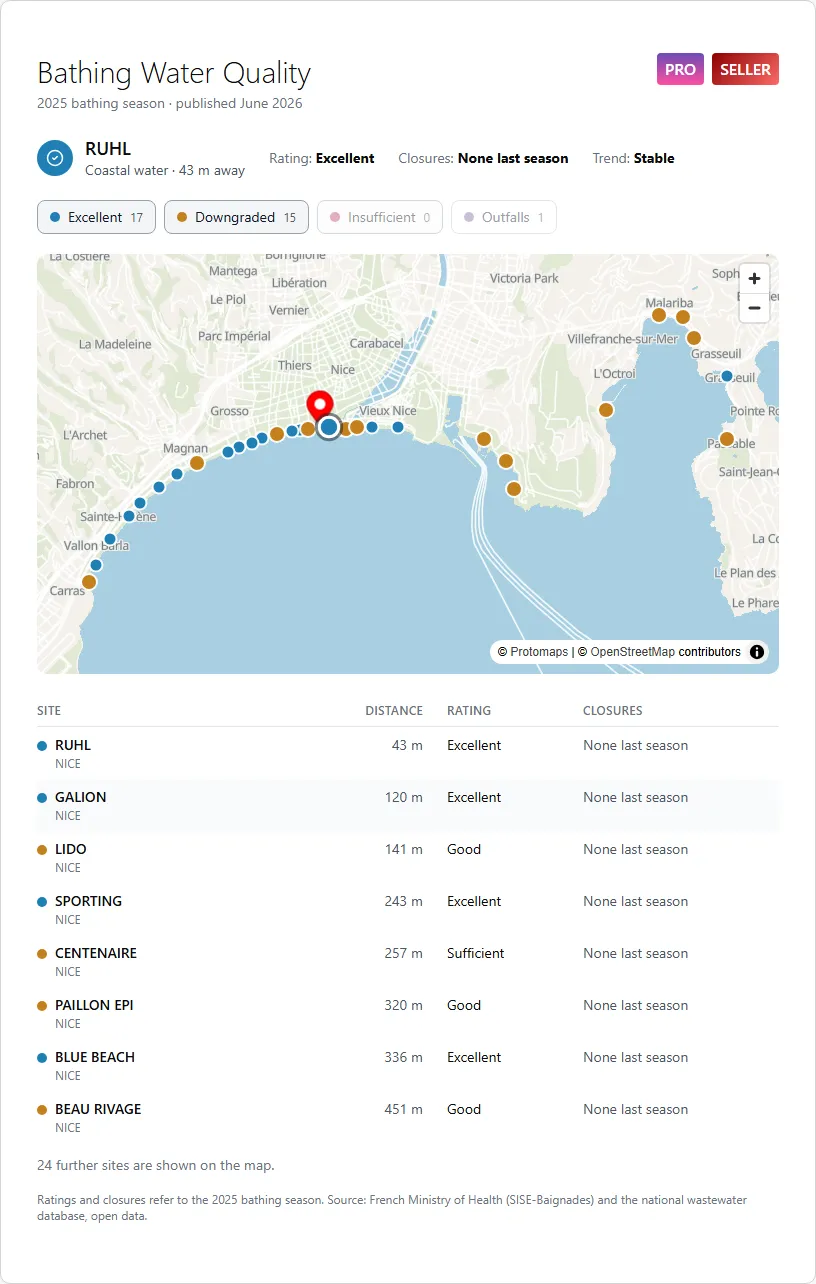
Is the water next door actually clean?
If the plan involves a beach, a lake or a river, it is worth knowing how the site was rated last season rather than how it looks in August. The European Environment Agency publishes monitoring results for 22,289 bathing sites across 29 countries, of which 3,378 are in France — 2,035 coastal, 845 lake, 444 river and 54 transitional.
Each site carries an official four-level rating and a closure history. A site rated poor is not a rumour and a site closed twice last season is not bad luck, and neither fact will appear in the listing for the apartment two streets away.
The pre-offer checklist
- Look up the ground risks for the address — clay, flood, seismic — and ask the seller what the foundations do about the ones that apply.
- Check the commune's short-term-rental regime before you model any rental yield.
- Establish the noise exposure per façade, not per building.
- Compute the sun and the shadow for the months you will care about, which are the winter ones.
- Check the rating of the nearest bathing site if water is part of the reason you are buying.
- Read the local warnings — the things people who live there report and no listing carries.
The report groups all six around one address: https://secrets.realestate/real-estate-insights-examples
Where these numbers come from
Clay exposure: the risk table of the Base de Données Nationale des Bâtiments, July 2025 release — 17,381,000 moderate or high out of 32,216,606 building records including unclassified ones. Short-term-rental regimes: a September 2026 snapshot of 424 French communes with a documented rule, 110 of them checked against the mairie or the EPCI règlement and the rest taken from the national register of authorising communes; it is not a complete map of France's 34,000-odd communes, and the strictest regimes change with each municipal decision. Bathing sites: the European Environment Agency's bathing-water register, 22,289 sites in 29 countries. Legal framework: article L.631-7 of the French construction and housing code as amended by the loi Le Meur of 19 November 2024.
Frequently asked questions
Is the seller obliged to disclose these risks?
For the state-mapped natural and technological risks, yes: France requires a risk statement to be attached to the sale. It is a form, though, and forms are read less carefully than they should be.
Does a high clay-risk zone mean I should not buy?
No. It means the foundations and any extension deserve a specialist's eye, and that the insurance history of the house is worth asking about.
Can a commune change its short-term-rental rule after I buy?
Yes. The authorisation regime is a decision of the local assembly and it can be introduced or tightened, which is why a rental yield that only works under today's rule is a fragile investment case.
Where can I see all of this for one address?
The risk, noise, sun, water and rental-regime sections sit in one property report: https://secrets.realestate/membership