The asking price of a French home is an opinion; the recorded sale price of the flat next door is a fact, and the two are rarely the same number. Secrets.RealEstate builds its estimate from 18.6 million notarised sale prices rather than from listings, which is why the number it returns often sits below the one in the window.
Why the asking price is not the price
An asking price is set by a seller and an agent, before any buyer has answered. It carries the seller's hopes, the agent's mandate, and whatever the neighbour got in 2021. It is a starting position, and in a slower market it is a starting position that ages.
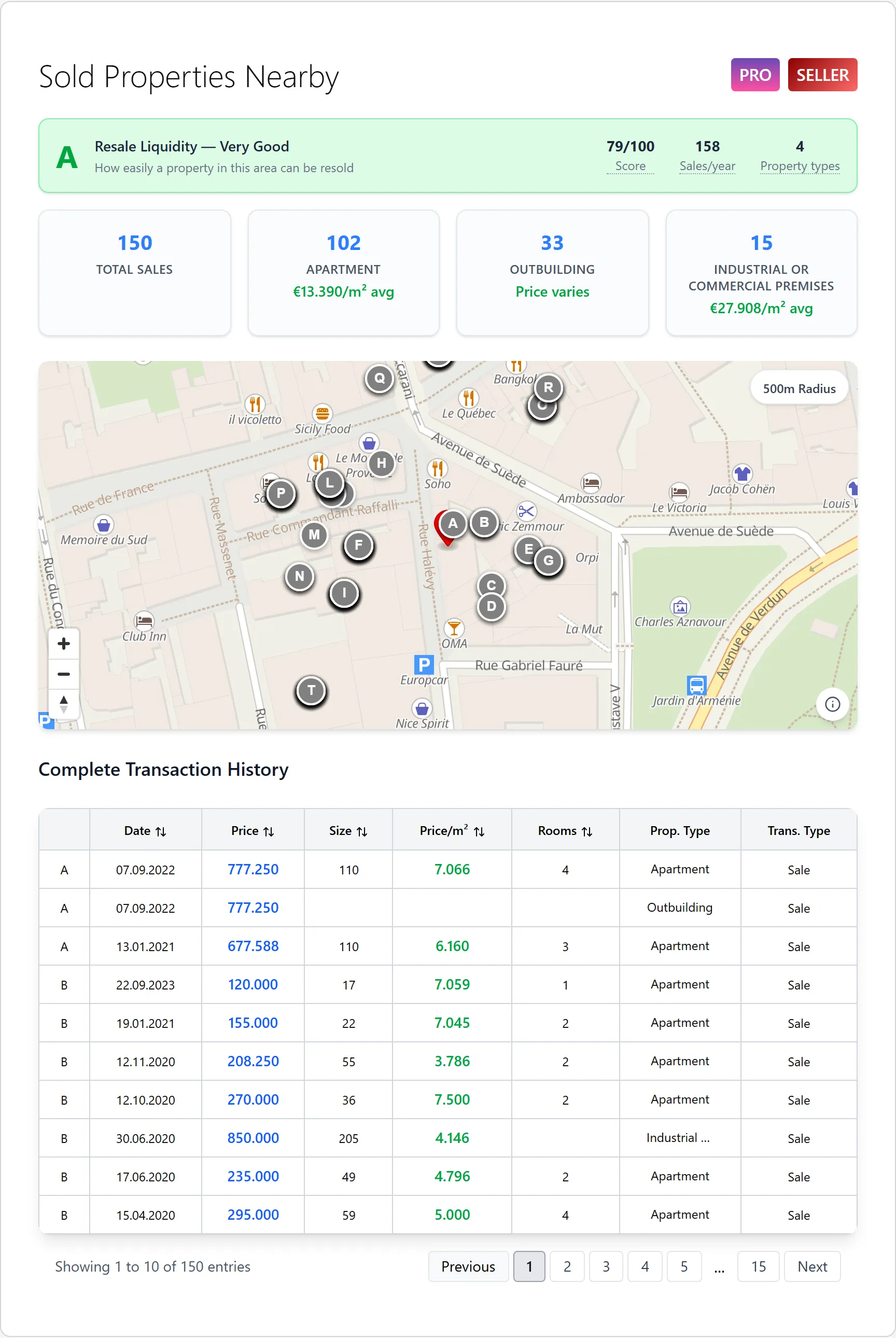
A recorded sale price is the opposite: it is what a buyer actually paid, registered by a notary and published by the French state. It is late — a sale reaches the public file months after the handshake — but it is not an opinion. The practical move for a buyer is to treat the listing as a hypothesis and the recorded sales within a few hundred metres as the evidence.
There is no shortage of either. On 17 September 2026 the platform held 63,085 live French listings, refreshed hourly, while the sold-price file behind the estimate holds 18.6 million transactions recorded between January 2020 and June 2025.
Where do French sold prices come from?
From DVF, the open file of notarised property transfers published by the French tax administration. Every sale of a French home is registered, and the register is public: address, date, surface, price. It is the single best public dataset in European residential real estate, and it is free.
Its limits are worth knowing before you lean on it:
- It lags. A transaction appears months after completion, so the most recent months are always thin.
- It describes the transaction, not the home. Condition, view, floor and renovation history are not in the file.
- It records the price, not the deal. A price that looks low may be a family sale.
- It stops at the department boundary of your patience: a single address needs the sales around it, not the commune average, and the two can differ by a third.
What actually moves the price per square metre?
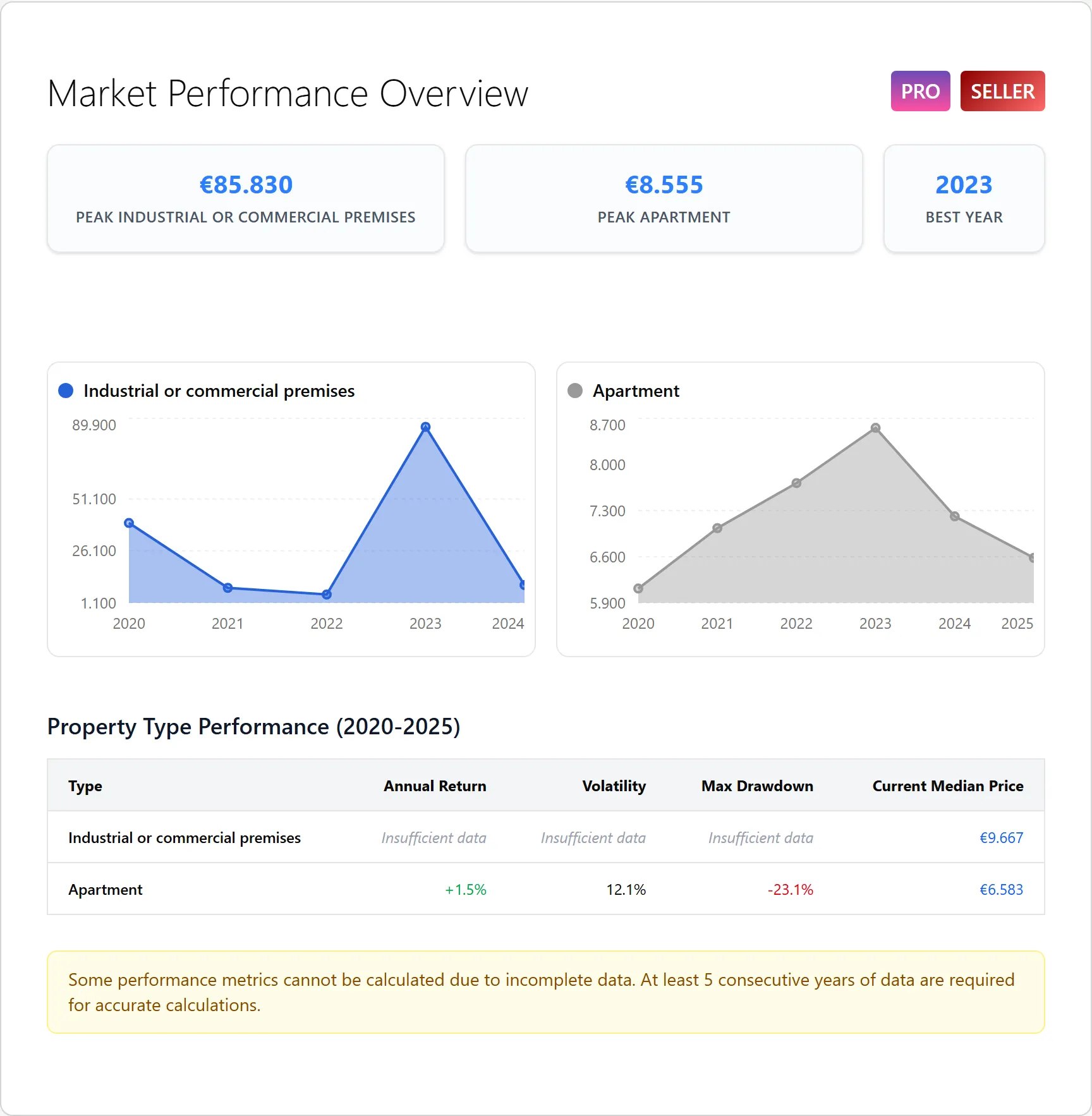
Location first, and not by a small margin — but once the location effect is removed, the same four attributes keep showing up in the French asking data. The figures below come from one joint regression on a 2026 snapshot of roughly 26,000 French asking listings, with each attribute fitted alongside the others so none of them absorbs its neighbour's effect:
- A sea view is worth about 18 % on a flat and about 15 % on a house.
- Condition is worth about 13 % on a flat: a listing described as renovated against one described as needing work.
- The construction era swings apartments by more than either: a pre-1949 building carries roughly 23 % more per square metre than a 1949–1974 one.
- A parking space is priced separately and locally. Across 386,000 standalone parking sales recorded in DVF between 2020 and 2025, the value runs from about €12,000 in the bottom tenth of the grid to up to €33,000 in the most expensive cell on the bay of Nice, with a median around €26,500.
All four are measured on asking prices, not on sales, so read them as what the market asks for an attribute rather than what it finally pays.
What does a sea view add to a French home's price?
About 18 % on an apartment and about 15 % on a house, measured on French asking prices. The figure comes from the hedonic model behind the Secrets.RealEstate Property Price Calculator, fitted on a 2026 snapshot of roughly 26,000 asking listings with the location effect removed, so the premium is what remains after two otherwise comparable homes in the same place are compared — one with the view, one without. The statistical strength differs between the two: the apartment coefficient is the firmer of the pair, the house coefficient is supported by fewer observations. Two cautions belong with the number. It is calibrated on listings rather than recorded sales, so it describes what sellers ask and buyers accept as a starting point, not a realised premium. And "sea view" in a listing is a claim by the seller, ranging from a panorama to a sliver between two roofs, which is exactly why it is worth checking against the building's actual orientation before paying for it.
The costs that arrive after the price
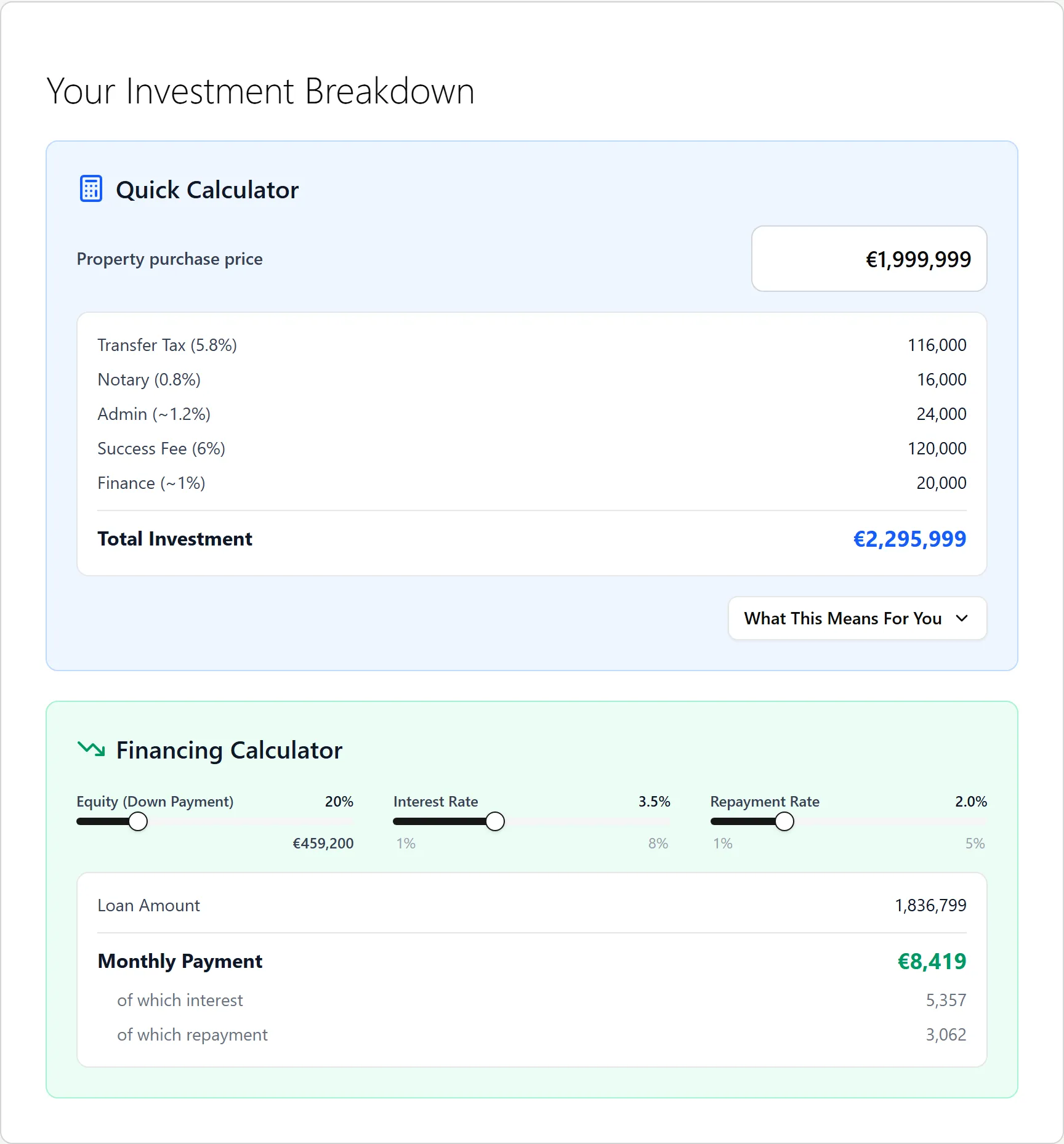
The price is not the outlay. On an existing French home, the fixed public part of the bill starts at roughly 6.6 % of the purchase price: about 5.8 % in transfer tax shared between the state, the region and the department, plus about 0.8 % in regulated notary fees. Since 2025 a département may raise its share of that tax, and many have, so look up the rate for the département instead of assuming the floor. Agency and service fees sit on top, typically 6–8 %, and those are negotiable in a way the first block is not.
Two consequences for an offer. First, the number you can afford to bid is not the number in your budget — subtract the fixed part before you start. Second, since the transfer tax scales with the price, every euro you negotiate off saves you a little more than a euro. The full breakdown, line by line, sits in the report: see how the cost breakdown works.
Building your number in five steps
- Pull the recorded sales within roughly 500 m of the address, over the last three years, in the same property type.
- Convert every one of them to a price per square metre and take the median, not the average — one outlier moves an average and cannot move a median.
- Adjust for the attributes the register does not carry: view, floor, condition, era, parking.
- Compare the result with the asking price and write down the gap in euros. That gap is your negotiating range, and it has a source you can show.
- Add the acquisition costs to whatever you finally bid, and check the total against the budget rather than against the price.
The whole sequence is what the estimate does automatically, including the adjustments: https://secrets.realestate/property-price-calculator
Where these numbers come from
Sold prices: DVF, transactions recorded January 2020 to June 2025, 18.6 million rows. Attribute effects: one joint regression on a 2026 snapshot of about 26,000 asking listings, location-demeaned — asking, not sold. Parking values: 386,000 standalone parking transactions from the DVF dependency records, 2020–2025, aggregated on a 0.1° grid; "up to €33,000" is the strongest single cell, not a Nice-wide figure. Live listing count: 63,085 on 17 September 2026, a figure that moves every hour. Fee rates: the French schedule as it stood in 2026; the transfer tax varies by département and several sit above the base rate since the 2025 option to raise it.
Frequently asked questions
Are sold prices in France public?
Yes. Notarised transfers are published in the open DVF file, including price, date, surface and address, for almost every residential sale in mainland France.
Why is the estimate lower than the asking price?
Because it is built from what buyers paid, not from what sellers asked. A persistent gap between the two is the most useful thing a buyer can know before making an offer.
How far back should comparable sales go?
Three years is a workable window in a stable market and too long in a fast-moving one. The closer and the more recent the comparable, the fewer adjustments you have to defend.
Does a commune average work instead?
Rarely. Within a single French commune the price per square metre can differ by a third between two streets, which is why the sales around the address beat the average over the town.